Foundly
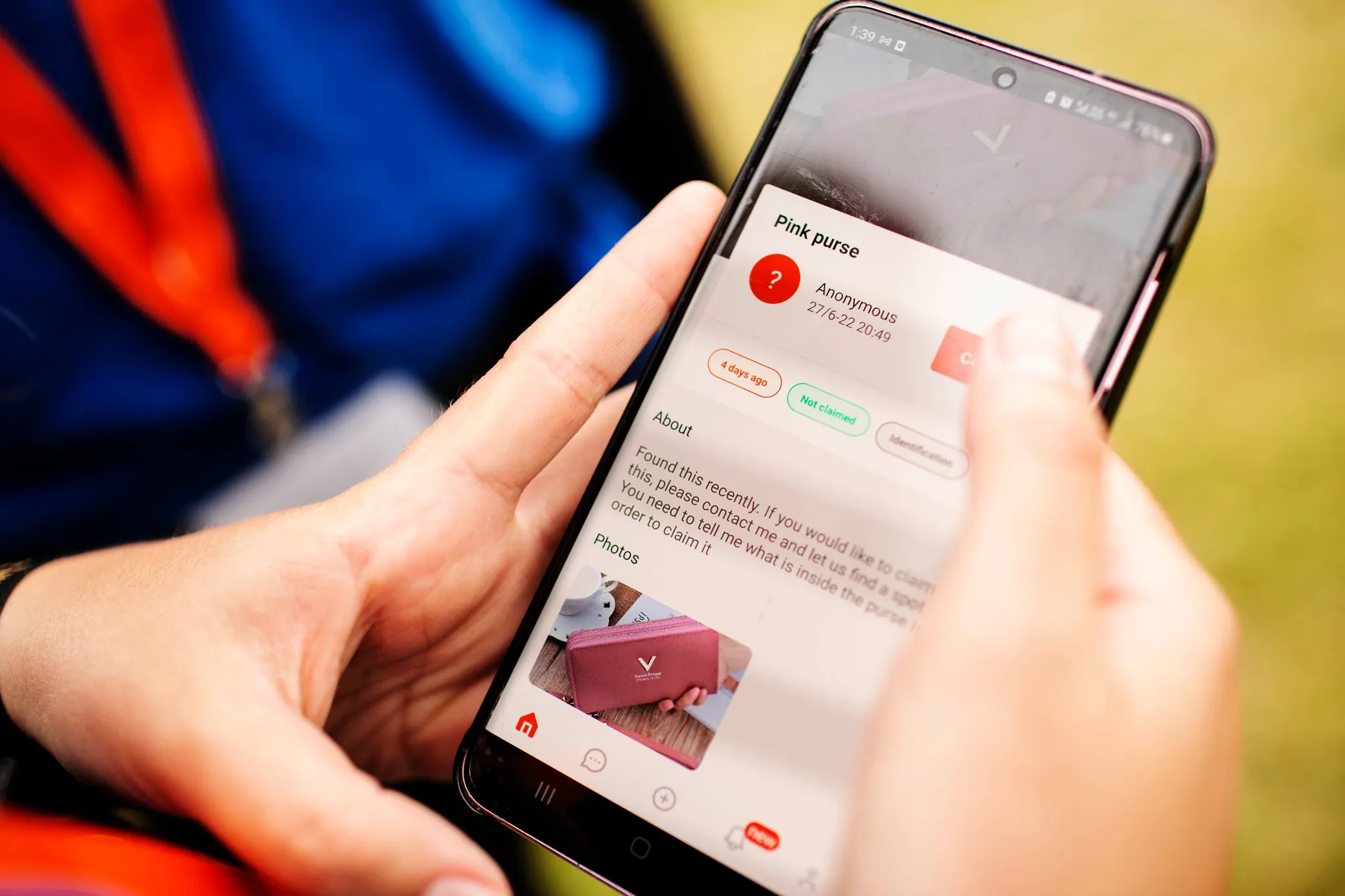
A 3-week specialization project for the master’s programme at DTU, in collaboration with Roskilde Festival — Powered by DTU Students. The brief: build something that addresses a real technical challenge at the festival, and ship it during the festival week itself.
The brief
Every year the festival’s Lost & Found booth ends up with a backlog of phones, jackets, headphones, sleeping bags — and a corresponding queue of people trying to find them. The classic flow is slow: a finder hands an item to the booth, the owner walks across the camp to ask if anyone has turned in something matching the description, and either the two are matched or the item lives in a box for weeks.
We thought a peer-to-peer flow would be faster: let the finder list the item directly, let the owner find it by searching or by subscribing to a tag, and let the two coordinate the handover themselves.
What we built
A crowdsourced Lost & Found, modelled loosely on a marketplace app like Facebook Marketplace or DBA, but specialized for found items at a festival.
- Create listings for found items, with photos, location pinned on a map, and a flag for whether the finder is keeping the item with them or has left it where it was found.
- Search and tag to make listings findable — keyword search, item-type tags, area filters.
- Subscribe to keywords so the app pings you when a future listing matches what you’re looking for.
- In-app chat between finder and owner to arrange the handover.
- Push notifications for new chat messages and matching listings.
- Deep links from notifications and shared listings, so a tap on a notification opens directly to the relevant item.
- User accounts to gate listing creation and tie chat threads together across devices.
The app shipped to the Google Play Store ahead of the festival, and we ran user surveys throughout the week to validate the flow with actual festival guests.
Stack
- React Native — one codebase for Android (the primary target — Roskilde demographics skew heavily Android) with a path to iOS later.
- Firebase — Auth, Firestore for the listing/chat data model, Cloud Storage for images, and Cloud Messaging for push.
- UI Kitten — the design system. Gave us a consistent, themable component set so we could spend the three weeks on the product, not on polishing buttons.
- Redux Toolkit — predictable state for the search/filter UI and offline-friendly listing cache.
- Nx — monorepo tooling for the app + shared utilities.
Outcome
Live on the festival site, distributed via the Play Store, used by real guests during the 2022 edition. The follow-up surveys gave us a clear list of what worked (the keyword-subscribe flow especially) and what didn’t (discoverability — getting people to install an app at a festival is its own design problem), shaping recommendations for whoever picks the project up next year.